Warehousing & Distribution
Warehousing and distribution, without owning the overhead
Peregrine Shipping coordinates warehousing and distribution through a network of partner facilities, covering receiving, storage, order handling, and outbound freight.
Overview
Storage and distribution without the capital cost
Warehousing and distribution services give shippers a place to hold, prepare, and redirect inventory without carrying the cost of a facility themselves. Coordinated from our team in Auburn, Maine, we arrange this through a network of partner warehouses, matching your storage and handling needs to the right facility rather than a fixed location.
The value in warehousing isn’t just square footage; it’s what happens inside it. Receiving and put-away, inventory counts, order pick and pack, cross-docking, and light assembly or labeling all fall under the umbrella, and the right mix depends on how your product moves. We scope the services around your actual flow of goods, not a one-size template.
Distribution is the other half: getting inventory back out the door as full truckload, partial, or parcel freight, on a schedule that matches your customers’ expectations. We coordinate that outbound movement as part of the same engagement, so storage and distribution aren’t handled by two separate parties working from two different plans.
Receiving and put-away
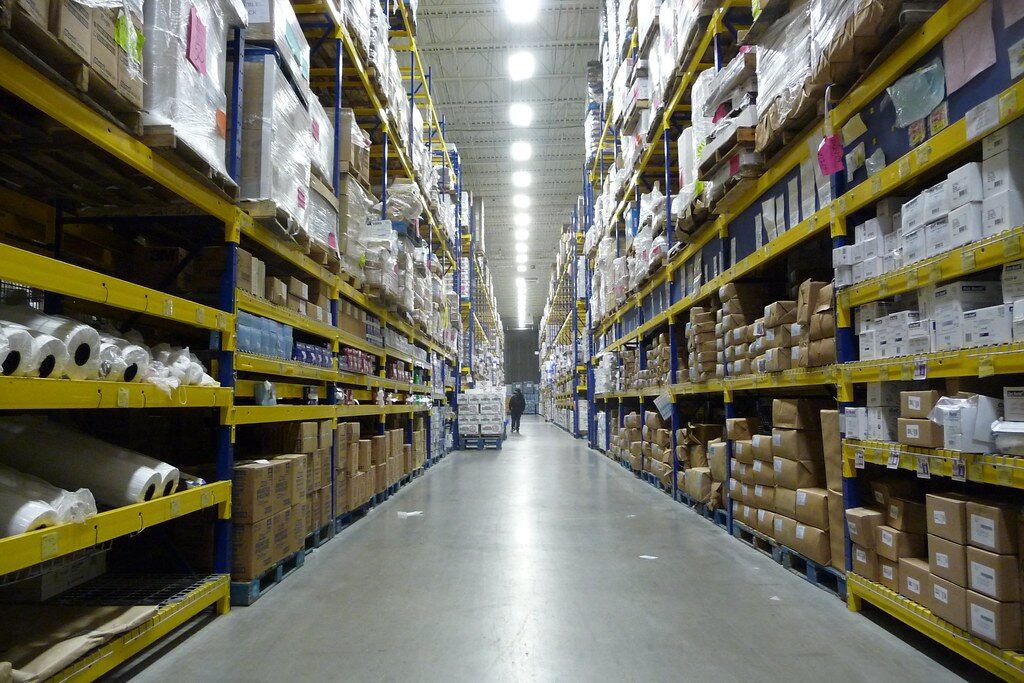
Inbound shipments are checked in, counted, and stored through our partner warehouse network. Discrepancies against your paperwork are caught at receiving, not weeks later during a cycle count.
Pick, pack, and cross-dock
Orders are picked and packed to your specification, or cross-docked straight through when storage isn’t needed. Cross-docking in particular can cut days out of a distribution cycle for freight that’s already sorted.
Value-added handling
Labeling, kitting, and light assembly can be arranged where your product requires it. That can include retailer-specific compliance labeling that would otherwise cause a chargeback.
Coordinated outbound freight
Outbound orders move as truckload, partial, or parcel freight, coordinated as part of the same plan. That means storage and distribution are planned together instead of handed off between two separate parties.
How inventory moves through the network
How it works
Step 1
Needs assessment
We review your storage volume, handling requirements, and shipping pattern to identify the right facility fit.
Step 2
Receiving
Inbound inventory is checked in against your paperwork and put away or staged for cross-dock.
Step 3
Storage and inventory handling
Stock is stored, counted, and prepared according to your specifications.
Step 4
Order fulfillment
Orders are picked, packed, and labeled ahead of outbound shipment.
Step 5
Outbound distribution
Freight is handed to the appropriate carrier, whether truckload, partial, or parcel.
Reference
Common warehouse value-added services
| Service | What it typically includes |
|---|---|
| Cross-docking | Moving inbound freight directly to an outbound trailer with little or no storage time |
| Kitting and bundling | Combining multiple SKUs into a single retail-ready or shippable unit |
| Labeling and ticketing | Applying retailer-compliant, barcode, or shipment labels before outbound movement |
| Cycle counting | Periodic inventory counts to confirm on-hand stock without a full physical count |
This reflects standard value-added services offered across third-party warehousing generally. Availability of each service through our partner network depends on the facility and your specific product.
FAQs
Warehousing questions
Need somewhere for your inventory to live and move?
Tell us your storage volume and order flow, and we’ll match you with the right warehouse capability.